
Teaching life a new trick: Bacteria make boron-carbon bonds

Nature. Lead authors of the report are Jennifer Kan and Xiongyi Huang, postdoctoral scholars in Arnold’s laboratory. “We have given life a whole new building block that it did not have before,” says Arnold, who is also the director of the Donna and Benjamin M. Rosen Bioengineering Center. “This is just the beginning. We’ve opened […]
Marie Curie, the migrant chemist

150 years after Marie Curie’s birth, Mike Sutton delves into her life and research When Maria Skłodowska was born, 150 years ago this month, her homeland had long since ceased to be an independent sovereign state. During the previous century, Russia had annexed most of Poland’s territory, with the rest divided between Prussia and Austria. […]
The origins of chemical industry? How the mines of Zewar transformed zinc production

How excavations in India have changed our view on industrialization One of the features of the Industrial Revolution was the translation of scientific laboratory techniques to viable industrial processes. This is usually regarded as a quintessentially European phenomenon – a product of the Age of Reason, with endeavours based on the results of reproducible scientific […]
(‒)-Pavidolide B

An innovative approach to making five-membered carbon rings makes for a strikingly short synthesis There is no shortage of good ways to make 6-membered rings. Perhaps the most general and powerful is the venerable Diels–Alder [4+2] cycloaddition, an amazingly useful reaction that’s simple enough to teach to undergraduates, yet still a common sight in the […]
How Pasteur’s Artistic Insight Changed Chemistry

How Pasteur’s Artistic Insight Changed Chemistry Crystals of tartaric acid. Louis Pasteur was studying a version of this byproduct of wine production, paratartaric acid, when he articulated the property of chirality. CreditPasieka/Science Source If you’ve ever had milk, you’re probably familiar with the work of Louis Pasteur, the 19th-century French chemist and biologist. He prevented diseases, […]
John D. Roberts Dies at 98; He Revolutionized the Field of Organic Chemistry
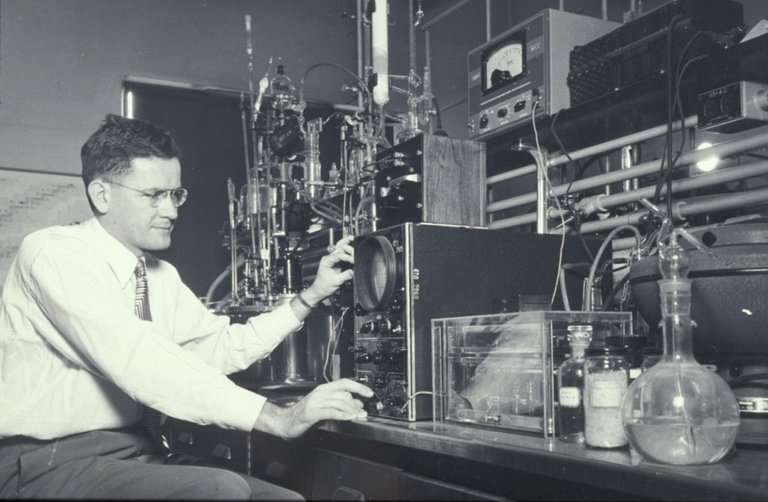
John D. Roberts at M.I.T. in 1947. He played a crucial role in the explosive growth of physical organic chemistry, a field that studies the reactivity of biological compounds. Credit M.I.T. John D. Roberts, an organic chemist who pioneered the use of nuclear magnetic resonance spectroscopy and other techniques to reveal the structures of molecules […]


