
Simple synthesis makes curious chiral clamshell molecule
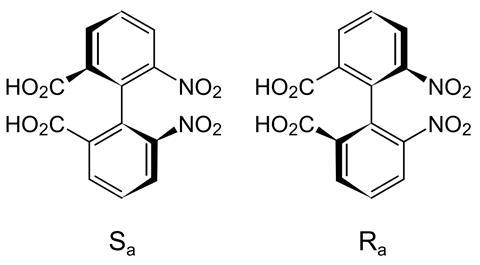
Compounds with two chiral axes hold promise for catalysis and even molecular machines A class of molecules that look like open scallop shells has been made by French researchers.1 This is the first time these curious compounds, whose chirality comes from hindered rotation around two bonds, have been synthesised in a single straightforward reaction. Most […]
Malacidins have a novel mode of action and can kill MRSA
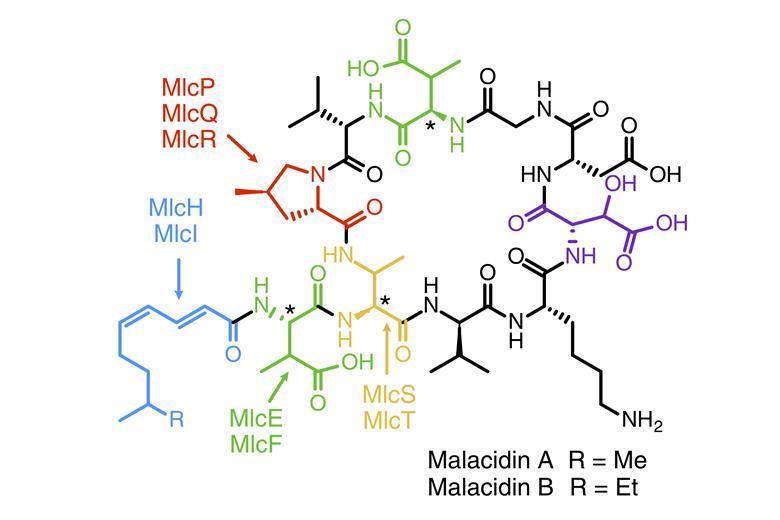
Malacidins have a novel mode of action and can kill MRSA A new class of antibiotics – named malacidins – has been discovered by researchers genetically screening microbes from crowdsourced soil samples. The discovery came from a citizen science project – Drugs from dirt – started by Sean Brady of the Rockefeller University, US. The […]
Photoredox sugar synthesis plausible on early Earth

Study using prebiotically realistic wavelengths adds weight to origin-of-life theory Scientists in the US have carried out experiments confirming that ultraviolet light could have driven the synthesis of simple prebiotically important sugars under conditions found on early Earth.1 Source: © Royal Society of Chemistry UV light photooxidises cyanocuprates, producing aqueous electrons, which are key for […]
Call to erase aqueous sulfide ion from chemistry

Spectroscopic developments question the existence of aqueous sulfide ions Source: Shutterstock For decades, scientists have used sulfide ions (S2-) in their calculations with little debate. Now, however, scientists in Australia argue that S2- should be stricken from the literature, potentially invalidating some older work.1 A project investigating the use of sulfide solutions to reduce mercury […]
Antibiotic analogue puts researchers on path to ending herbicide drought

Research flags DNA gyrase as a new target for pesticides Scientists in Australia and the UK have found the first new herbicidal mode of action in over 20 years by modifying the antibiotic ciprofloxacin. They successfully synthesised a ciprofloxacin analogue that selectively targets an enzyme required for plant growth, yet has decreased antibacterial activity. The […]
Can you hear the chemistry?

A well-trained ear can determine the concentration and pH of a strong acid just by listening, new research suggests. But fear not, you don’t have to be a piano tuner to exploit these findings. A new method, developed by Dara Fitzpatrick from University College Cork, Ireland, and his colleagues, uses broadband acoustic resonance dissolution spectroscopy, […]


