
First persistent monosubstituted carbene created

[:pb] By Kira Welter Clever structural design enables room-temperature isolation of highly reactive molecule Scientists have used a bulky, electron-poor ligand to prepare a monosubstituted carbene that can be isolated and characterised at room temperature,1 showing that even extremely reactive species can be stabilised with the right substituent. The compound could have interesting synthetic applications. […]
Nanopore sensors make breakthrough in monitoring health and disease

By Gege Li Home health diagnostics could soon be much more useful thanks to nanopore sensors that allow direct measurement of multiple metabolites. This will let doctors monitor their patients’ health using blood, sweat and saliva samples, as well as keep an eye out for any new diseases developing. Although biosensors integrated into electronic devices […]
Inorganic molecule mimics odd benzene isomer

[:pb] By Katrina Krämer An unlikely inorganic benzene has been made by scientists from Singapore and China. The molecule is a nitrogen–boron zwitterion featuring a rare bridging bond between π orbitals on opposing sides of the ring. Source: © 2018 American Chemical Society Benzene and its valence isomers (top) some of which have been synthesised. […]
Banned persistent pollutant still threatens half of killer whales 30 years after ban

By Gege Li The survival of over half of the world’s killer whales hangs in the balance because of a highly persistent and toxic class of chemicals. Despite a near total ban on the production of polychlorinated biphenyls (PCB) 30 years ago these carcinogenic and reproductive toxins continue to persist in the environment. New research […]
Beryllium double bond predicted

Proposed Be–Be bond would be first double bond between s block elements using only π electrons By Jamie Purcell Source: © Royal Society of Chemistry Charge decomposition analysis showed that the degenerate Homo−1 in Be2Li4 containing four electrons has lower energy than the original fragments’ orbitals; thus, double-π bonds inside sustain and steady the whole skeleton […]
Hepatitis C drug lead designed to target virus RNA

[:pb] By James Urquhart The longstanding goal of designing RNA-targeting drugs has been given a boost thanks to a technique that identifies drug-like small molecules which selectively bind to disease-causing RNA. The US team demonstrated the approach by designing an antiviral drug lead for hepatitis C based on its RNA sequence and suggest the technique […]
Superacid helps scientists solve protonated white phosphorus structure
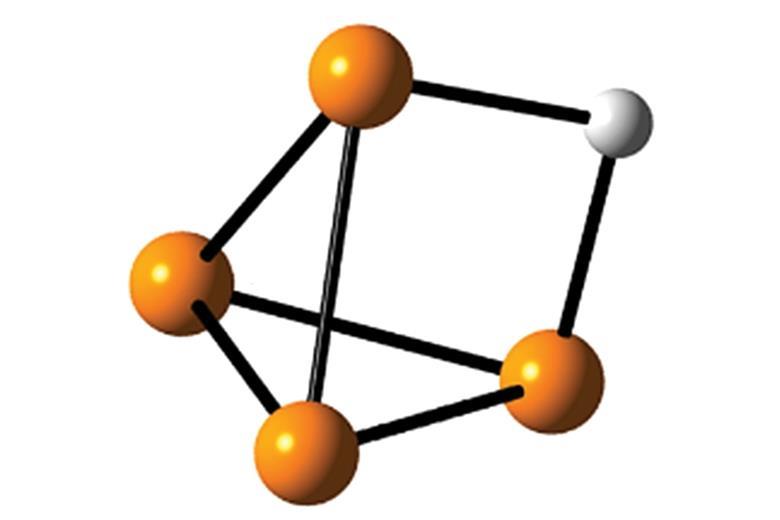
[:pb]By Eve Rooks Findings set to fuel phosphorus activation research Source: © Royal Society of Chemistry The weakly bonded hydrogen of [P4H]+ sits on the edge of the P4-tetrahedron A team from Germany has made protonated white phosphorus in solution using a Brønsted superacid, and experimentally confirmed that the weakly bonded hydrogen of [P4H]+ sits […]
Super-reactive molecule could solve space sugar mystery

[:pb] By Katrina Krämer How did carbohydrates form in space and on early Earth? The clue might be in the carbene A highly reactive molecule might solve the puzzle of how sugars formed in interstellar space and on prebiotic Earth. Even under space-like conditions – without water and at ultralow temperatures – the carbene compound […]
Blood markers predict which firefighters will go on to develop lung disease linked to WTC attacks

By Rebecca Trager Two dozen metabolites in blood samples from firefighters who were exposed to the dust and smoke from the World Trade Center (WTC) towers, during the 11 September 2001 terrorist attacks in New York City, can accurately predict which will develop lung disease. The research, carried out by a team at New York […]
The alphabet soup of life
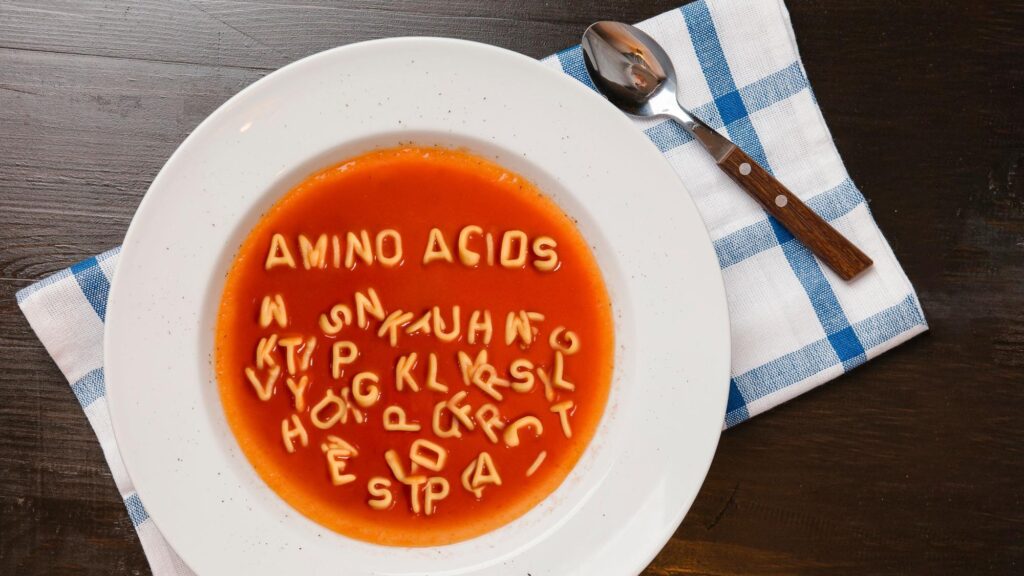
[:pb]By Rachel Brazil Why did nature stop at 20 amino acids? Rachel Brazil tries to answer the question – and see what it means for how life began and evolved For many researchers, studying the chemical origins of life is a side project – it’s what they do in between their grant-funded work on the […]
Wireless communication breaks through water-air barrier

Summary: In a novel system, underwater sonar signals cause vibrations that can be decoded by an airborne receiver. MIT Media Lab researchers have designed a system that allows underwater and airborne sensors to directly share data. An underwater transmitter directs a sonar signal to the water’s surface, causing tiny vibrations that correspond to the 1s […]
How a particle accelerator helped recover tarnished 19th century images

The technique could aid restoration efforts By Katherine Bourzac BIG REVEAL To the naked eye, the woman in the damaged daguerreotype (left) looks ghostly. A synchrotron helped researchers restore her portrait (right). With the aid of a particle accelerator, scientists are bringing back ghosts from the past, revealing portraits hidden underneath the tarnished surface of […]


